 Gin is the English national drink, but originated in the Netherlands. His invention seems to have to be attributed to a doctor from the University of Leiden, Franciscus de la Boë (1614-1672), also known as Franciscus Silvius, pseudonym with which he signed his writings. Officially the intent of the pharmacist of Leiden were humanitarian and therapeutic: to add to the proven virtues of aquavitis (restorative, digestive, source of energy, health and good humor) the only merit that still does not recognize them, that of benefiting the kidneys purifying them, as the juniper was considered a panacea for the tired kidneys. His taste was so pleasant that the British troops drank in large quantities during the campaign in the Netherlands. From Holland to England the pace was short … In fifty years (from 1684 to 1735) the annual English production of alcoholic beverages went from half a million gallons to almost 5 and a half million and the gin became the most popular drink in London is cheap. The signs of the local promises: Drunk for a penny, dead drunk for two pence (drunk with a penny, drunk with two). The situation degenerated early and in 1751 the law was passed that significantly limited the number of drinks, at the same time weighing heavy taxes on alcohol in general and gin in particular. The word “gin” is the abbreviation from the Dutch genever, which in turn derives from the Latin juniperus, juniper. Gin is a cereal spirit with mainly juniper berries. In the mixture are however also present other numerous ingredients such as coriander seeds, cardamom, licorice, fennel, nutmeg, angelica root, orange and lemon peel, iris, almonds, fennel, anise, bark of quassia, etc. . These ingredients vary according to the different recipes of each manufacturer, which, as tradition dictates, are jealously kept secret. The drier types, characterized by a strong scent of juniper, come from England and the USA, while the Dutch gins are distinguished by the malty taste and because they are more full-bodied. Gin comes in many mixed preparations, so there are many glasses in which it can be served. Of Dutch origin but widespread in Germany, where it is produced, is the Steinhäger, a grains brandy flavored with juniper berry must, sold in ceramic bottles. On the market there are different types of gins: • London dry gin: is the best known and famous English gin, and is the most used. It is produced by distillation of a fermented cereal in column alembic. To this alcohol are added juniper berries and other flavoring and redistillated ingredients. Generally it is not aged, with a dry taste, a perfume and elegant, not excessively marked. Its alcohol content fluctuates around 45 °. It is hardly drunk smooth, in which case it should be served cold. It is excellent as a base for an infinity of long-drinks.
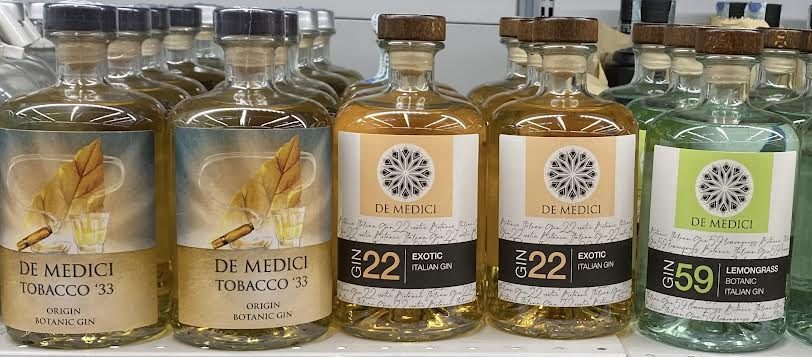
 GIN DE MEDICI